LuxSUV - Premium Ground Transportation
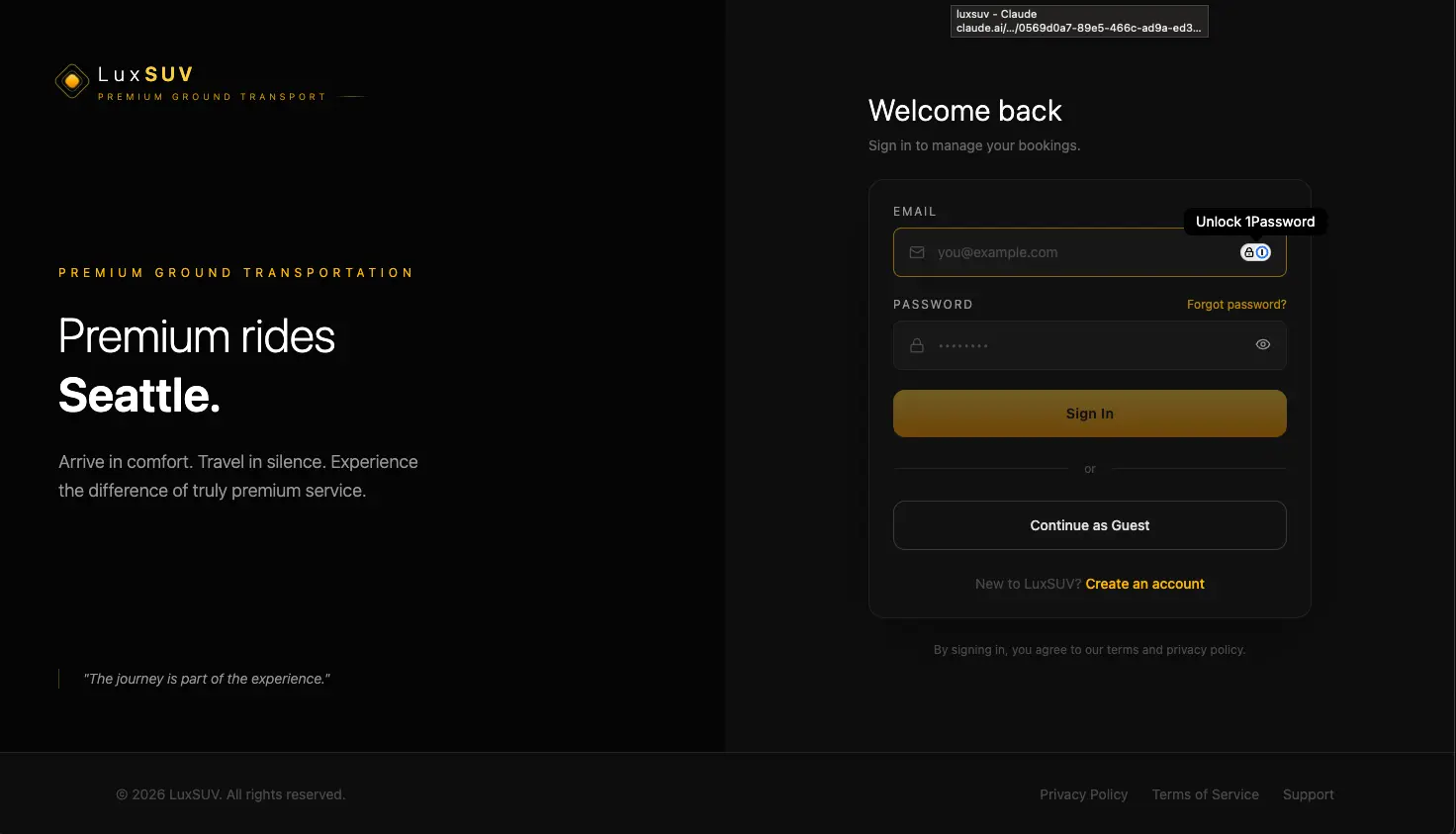
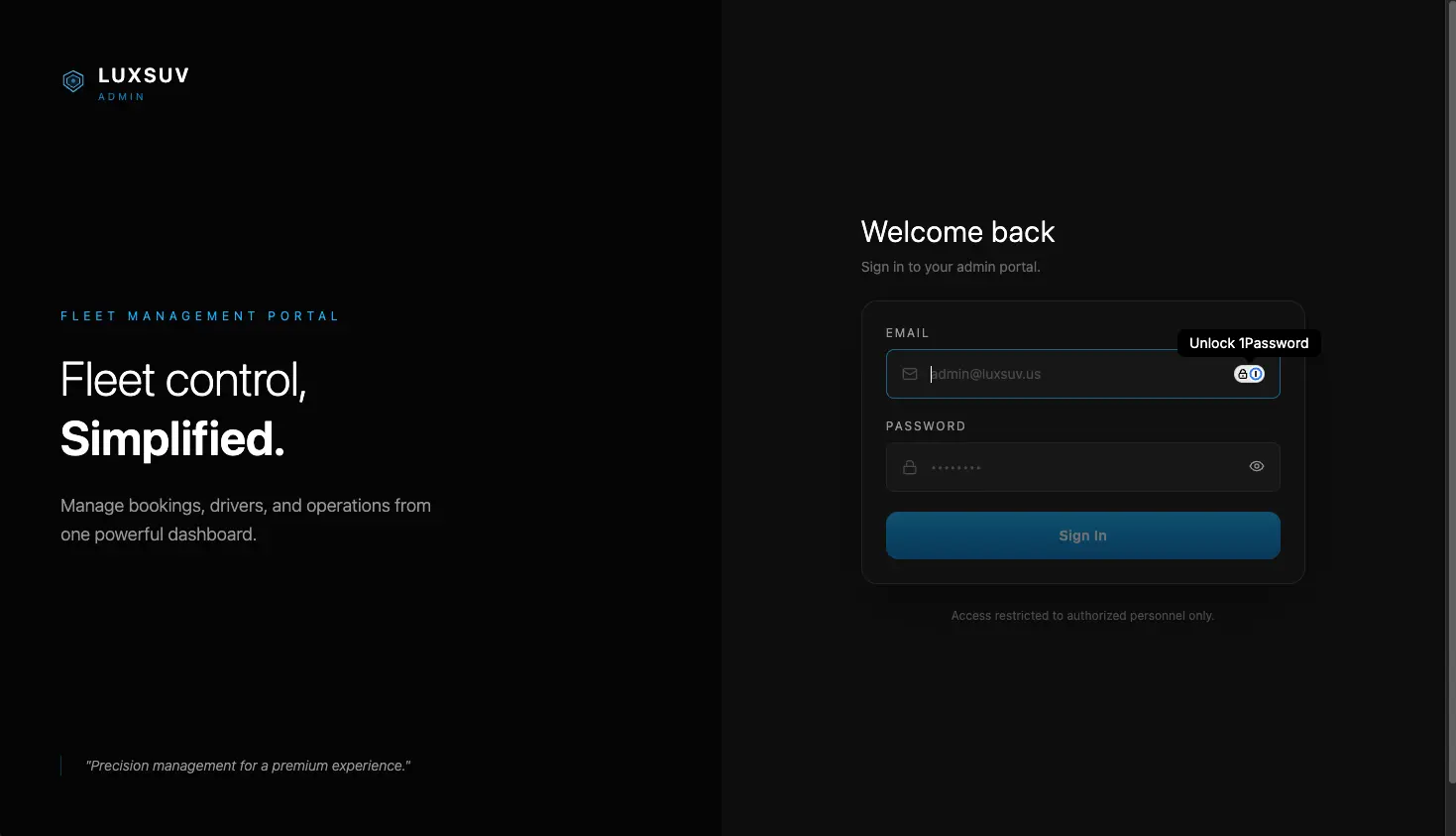
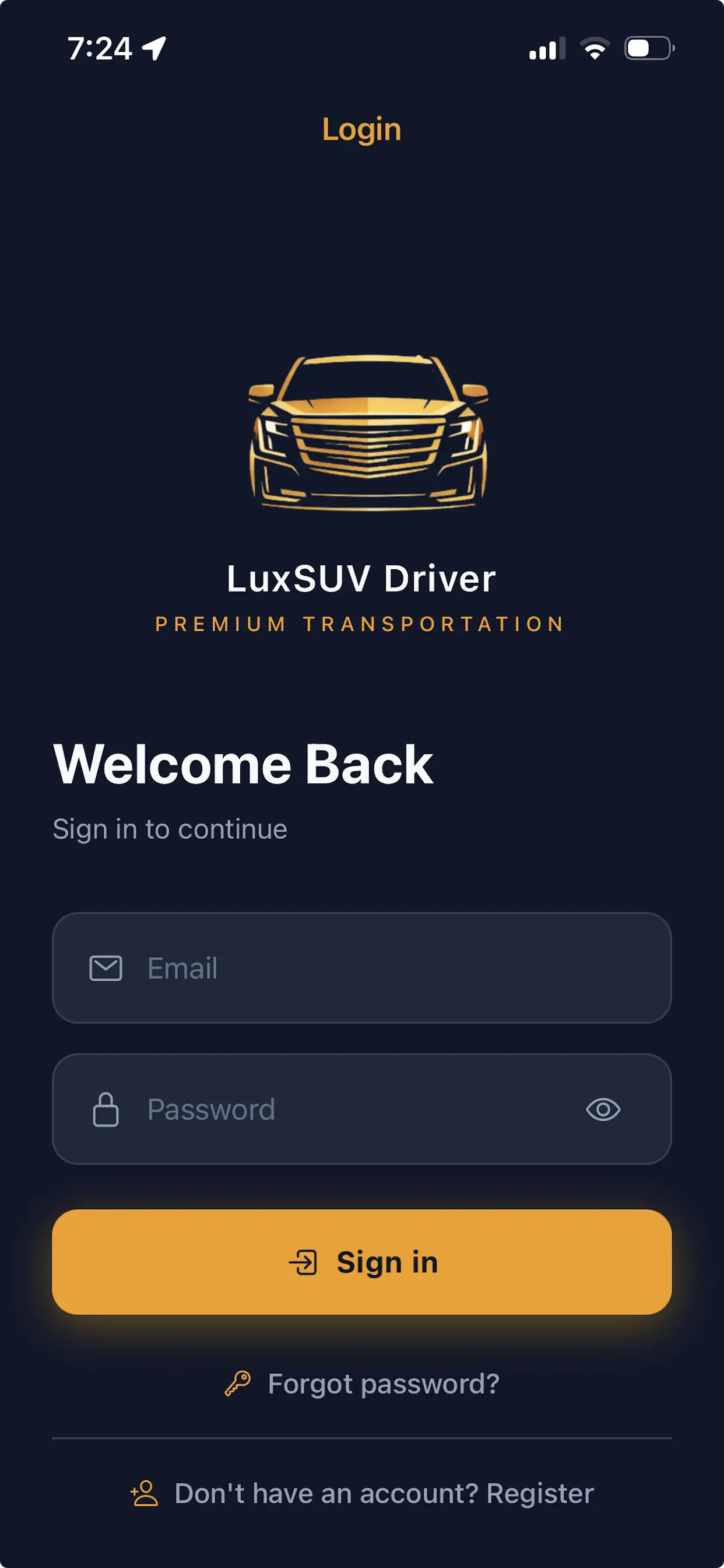
A production-grade luxury transportation platform built across four applications: a Go REST API, a React rider web app, a React Native iOS driver app, and a React admin portal. Features multi-role authentication, real-time ride tracking via SSE, Stripe payments, Google Maps integration, and guest booking with magic links. The driver app is live on the App Store.
 Appstore Link →
Screenshots
Tech Stack
Problem
Build a production luxury transportation platform from scratch that serves riders, drivers, and admins across web and mobile — while handling real-world complexity like guest bookings, payment processing, real-time location tracking, and multi-role authorization.
Solution
Designed a layered Go backend with role-based JWT authentication, separate auth flows for web (httpOnly cookies) and mobile (secure token storage), and SSE for real-time updates. Built three frontend applications sharing consistent design and API patterns. Driver app published to the App Store via EAS Build.
Key Features
- ✓Multi-role authentication: Rider, Driver, Admin
- ✓Guest booking with magic links (no account required)
- ✓Real-time ride tracking via Server-Sent Events
- ✓Stripe payment integration with additional fees support
- ✓Google Maps + Distance Matrix API for route pricing
- ✓Driver approval workflow and location updates
- ✓iOS driver app published to the App Store
- ✓Admin portal for managing bookings, drivers, and riders
- ✓Separate web and mobile auth endpoints (cookies vs. token body)
- ✓Email verification and SMTP notification system
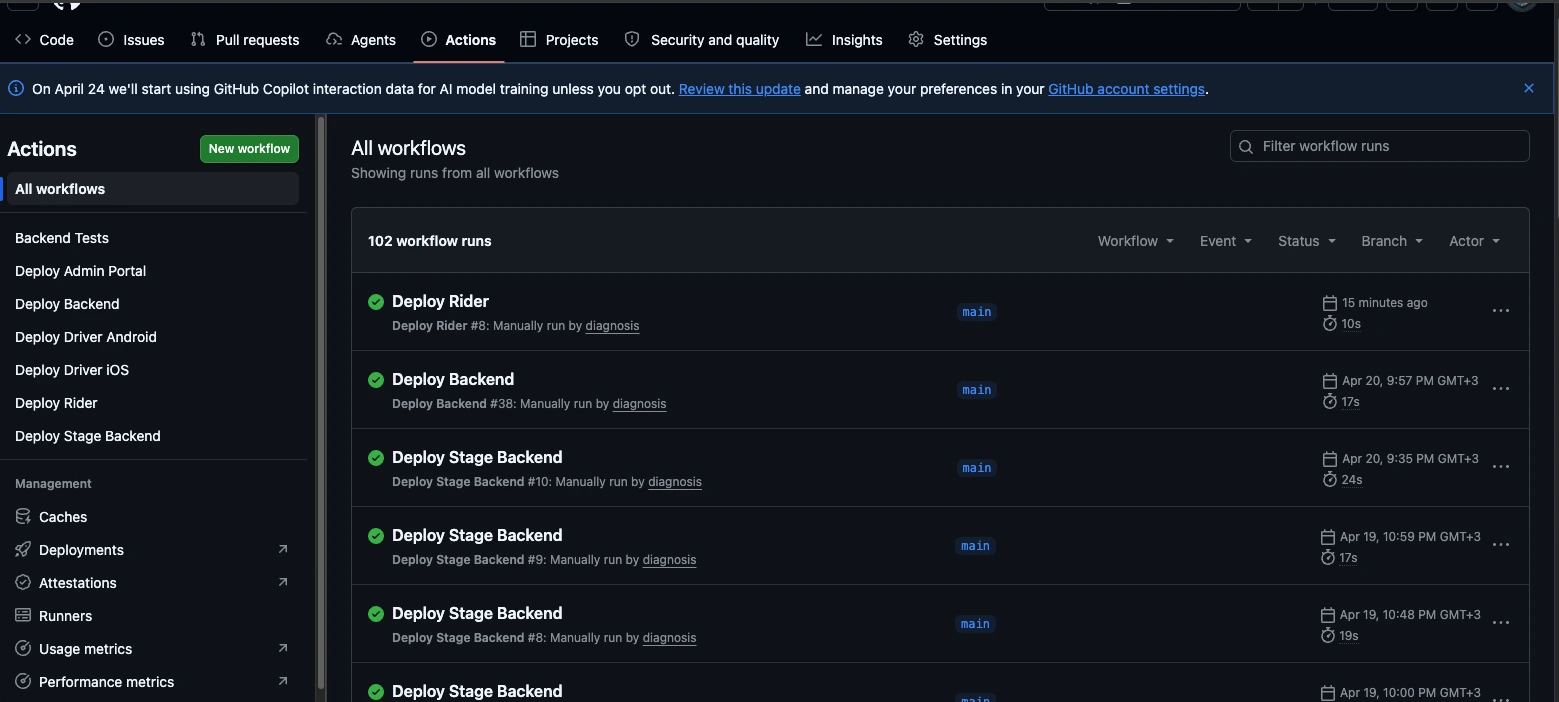
- ✓Playwright E2E test suite with GitHub Actions CI/CD
- ✓Background location tracking on iOS via Expo Task Manager
Architecture
Backend: Go with Chi router on DigitalOcean. Layered architecture (handlers → stores → pgx/PostgreSQL). Booking store split across 5 files by responsibility. Middleware handles JWT auth, role checks, CORS, and guest tokens. SSE hub broadcasts real-time ride events to connected clients. Stripe and Google Maps integrated as internal services. Frontend: Rider web app and Admin portal built with React, TanStack Router/Query, Tailwind CSS v4, deployed on Vercel. Driver app built with React Native/Expo, distributed via EAS Build and published to the App Store. All clients share consistent API envelope format and token refresh patterns.
Challenges & Solutions
- Architecting separate auth flows for web (httpOnly cookies) vs mobile (SecureStore) without code duplication
- Distinguishing 401 (expired access token, retryable) from 403 (expired refresh token, terminal) to prevent infinite retry loops
- EAS cloud builds require env vars registered via eas env:create — .env files are not bundled
- Google Distance Matrix API ferry routing configuration for Seattle–Vancouver corridor
- Background location tracking on iOS with Expo Task Manager and App Store compliance
- Building a full TanStack Router/Query SPA architecture as a backend engineer learning frontend
What I Learned
- •Defense-in-depth: enforcing business rules at both frontend and backend layers
- •Mobile vs web auth patterns and why they require different backend endpoints
- •EAS Build pipeline, TestFlight distribution, and App Store submission process
- •Go layered architecture at scale: handlers → stores → PostgreSQL across a large domain
- •TanStack Query server-state patterns: hooks, refetchInterval, optimistic updates
- •Real-world SSE usage for live ride status broadcasting